
MARINE EXTENSION AND GEORGIA SEA GRANT


|
|
||
|---|---|---|
|
|
Oyster seed produced and sold to local oyster farmers, generating an estimated economic impact of $1 million to $1.4 million in FY25 |
|
|
|
Individuals of all ages visited the UGA Aquarium or engaged in programming in FY25 |
|
|
|
People participated in Marine Extension and Georgia Sea Grant's public programs in FY25 |
|
|
|
Gallons of stormwater runoff managed through seven green infrastructure practices across three sites in Brunswick, Georgia in FY25 |
|
|
|
Ecotour guides certified since the Coastal Awareness and Responsible Ecotourism program started and have shared the Georgia coast with more than 26,000 people |
|












“[Marine Extension and Georgia Sea Grant] has really helped changed my behavior as a
scientist. You know, as scientists, we want to be just left alone and continue the science that we think is exciting, but Sea Grant has really led me more towards how my research can actually benefit people directly.”
Joel Kostka, professor at Georgia Institute of Technology and recipient of Marine Extension and Georgia Sea Grant's competitive research funding


IN THE NEWS

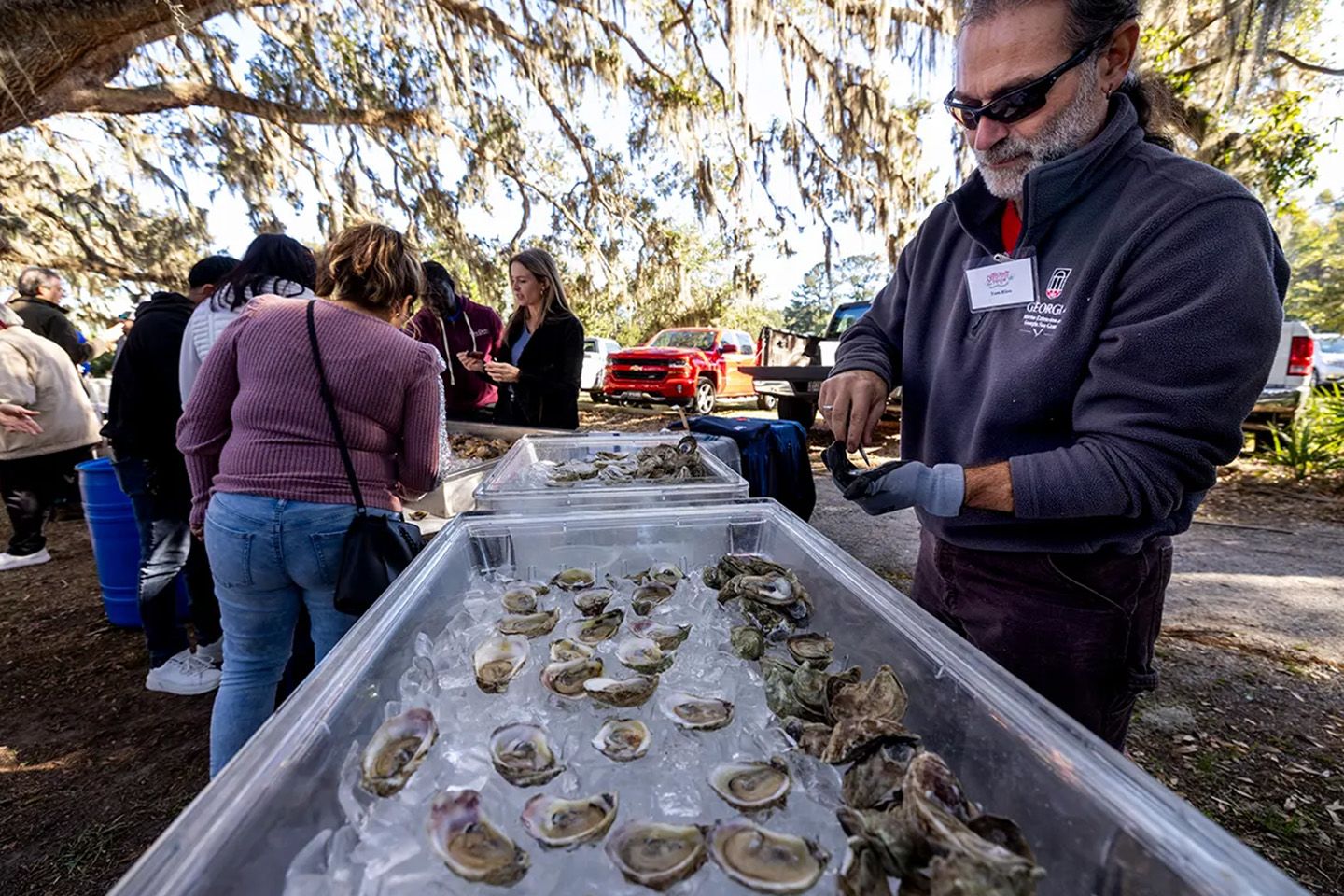
Georgia’s budding oyster aquaculture industry is beginning to spur community and economic growth
Oysters begin life as tiny larvae, drifting in the water column until they find a hard surface on which to settle and grow. As adults, they create underwater reef communities that attract fish, crabs, and other marine life, forming the foundation of a thriving ecosystem. A similar oyster community is taking shape on land, driven by the rise of sustainable oyster aquaculture in Georgia. UGA researchers, shellfish farmers, restaurants, nonprofits, and state agencies are teaming up to grow Georgia’s coastal economy with oysters at the center.

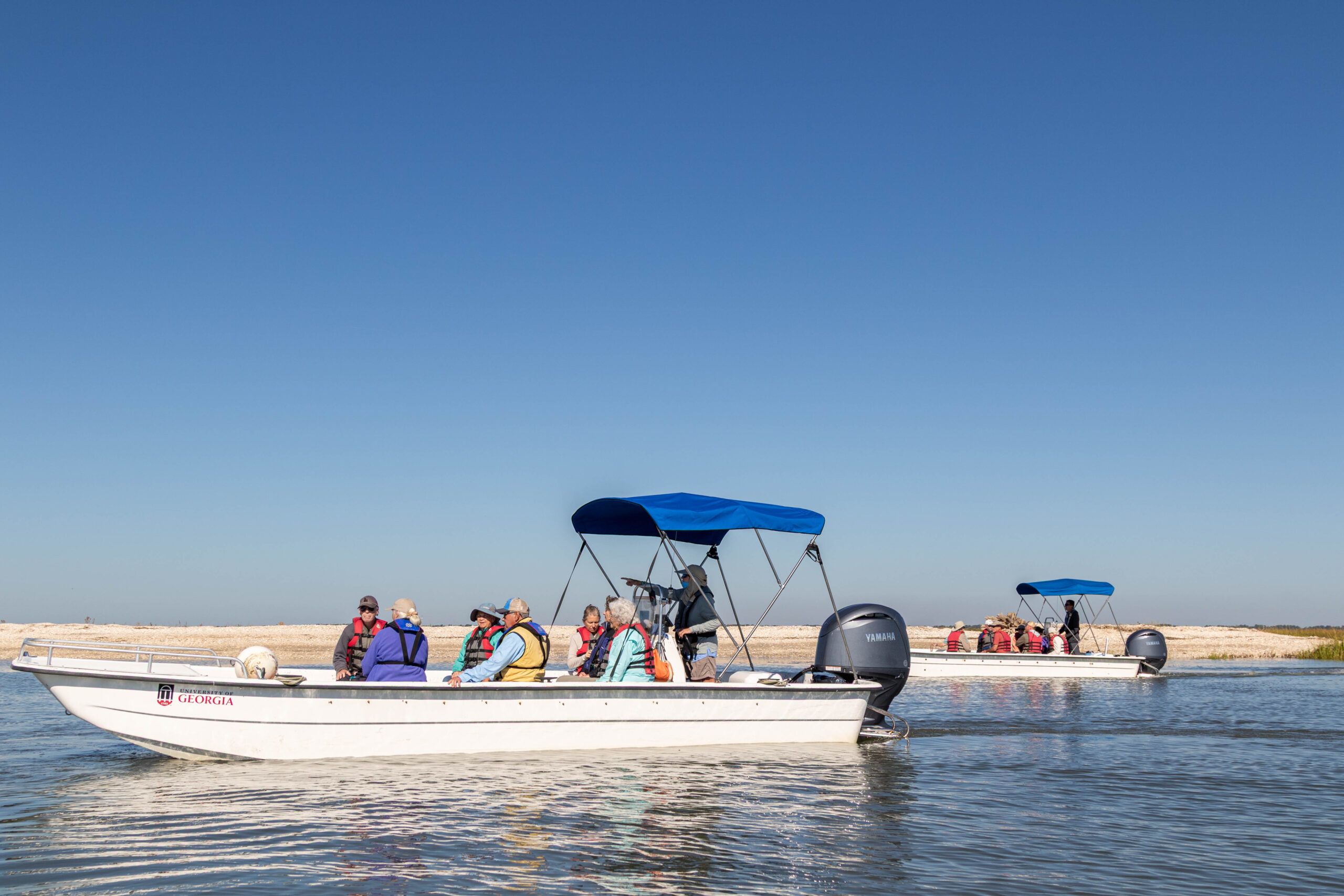
Yamaha Rightwaters™ repowers Marine Extension and Georgia Sea Grant fleet to improve health of Georgia coastline
Yamaha Rightwaters is partnering with Marine Extension and Georgia Sea Grant to repower and support its research and education fleet over the next five years. The partnership, which began in 2025 with the donation of three 150 horsepower outboards, will continue through 2027 with four additional engines to keep the vessels running efficiently. These boats play a vital role in supporting hands on aquaculture research, habitat restoration and monitoring, and environmental education programs for students and visitors


 Built with Shorthand